- If you have any questions, please contact us!
- +84 965 624 065
- info@greennrj.com.vn



Import Sunscreen into Vietnam in 2026: A Simple and Effective Guide
May 25, 2025
How to Effectively Import Whitening Cream into Vietnam in 2026: A Step-by-Step Guide for Global Brands
May 27, 2025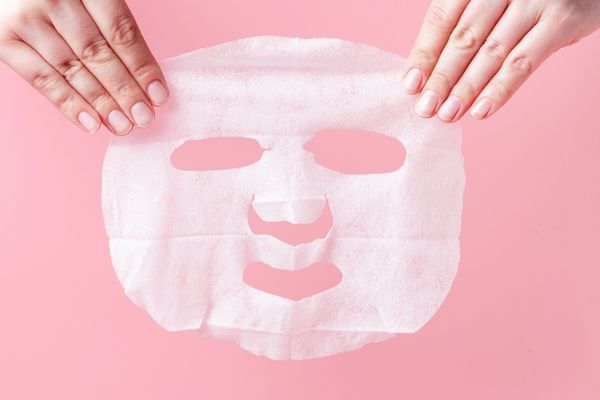
What procedures are required to import face masks into Vietnam in 2026 to avoid delays at border crossings? This is a question many businesses only truly consider when starting their first shipment. The market is developing rapidly, and demand is clearly present, but without a thorough understanding of regulations, even a small mistake can delay the entire shipment. In this article, Green NRJ will go through each step from a practical perspective to give you a clearer picture before you begin.
How are face masks regulated in Vietnam?
In Vietnam, face masks are not classified as a separate category but are grouped under the cosmetics category. This applies to all product types, from sheet masks and clay masks to gels and overnight masks. This classification necessitates a mandatory requirement: before being marketed, each product must complete the cosmetic product notification procedure. Without a notification number, the product is virtually “outside the system,” unable to be officially imported or legally distributed.
It’s important to note from the outset: foreign businesses cannot independently notify cosmetic products in Vietnam. Applications are only accepted when submitted by a domestic legal entity. Therefore, to introduce a product to the market, a business will need to work with a Vietnamese entity, possibly a distributor or an authorized representative. This authorization is not just a formality but also a crucial factor in determining the validity of the entire application.
HS Code & Import Duties to Import Facial Masks into Vietnam
When going through customs, face masks are usually classified under HS code 3304.99.90, belonging to the group of skincare products that are not further subdivided. With this classification, the current common tax rate includes 10% value-added tax and approximately 18% import tax under the normal import category.
However, in reality, the tax rate a business has to pay may vary depending on the origin of the goods. If the product comes from countries that have signed trade agreements with Vietnam and is accompanied by a valid certificate of origin, the import tax can be significantly reduced, in some cases even to 0%.
HS code | China | South Korea | ASEAN | Japan | EU | USA | |||||
| ACFTA | RCEP | AKFTA | VKFTA | RCEP | ATIGA | RCEP | AJCEP / VJEPA / CPTPP | RCEP | EVFTA | No FTA with Vietnam (MFN Import Duty rate applies) | |
| 33049990 | 0% | 12% | 5% | 0% | 12% | 0% | 12% | 0% | 12,70% | 5% | 18% |
Even so, not every shipment can take advantage of this preferential treatment. The certificate of origin is often the point where errors occur, from inconsistent information to the use of incorrect forms. In such cases, businesses not only lose the tax preferential treatment but may also face further scrutiny of their documentation. Therefore, if you want to optimize import costs, careful preparation of documentation is necessary from the outset, rather than dealing with problems only after they arise.
Customs Clearance When You Import Facial Masks into Vietnam
After receiving the notification number, the business will proceed with customs declaration for the shipment. If the documents are complete and the information between the documents is consistent, the customs clearance process is usually quite fast, within 2-3 working days.
A basic set of documents for customs procedures usually includes the customs declaration form, commercial invoice, packing list, bill of lading, cosmetic product notification number, and certificate of origin if you want to benefit from preferential tax treatment. Depending on the case, the customs authority may request additional documents for verification.
Conversely, if there are any unclear points or inconsistencies between the documents, the shipment is very likely to be held for inspection. This will prolong the processing time and incur additional storage and related costs. Therefore, careful preparation of documents from the beginning remains a crucial factor in ensuring a smooth customs clearance process.
Labeling Requirements to Import Facial Masks into Vietnam
Before a product is released to the market, the labeling process needs to be carefully prepared in accordance with regulations. This is often the last step many businesses take, leading to oversight, but it is a crucial area for regulatory authorities to inspect thoroughly.
The label must clearly display basic information such as the product name, uses, instructions for use, ingredients, and weight or volume. In addition, details such as the production date, expiration date, batch number, origin, manufacturer information, and the responsible party in Vietnam must also be included. For cosmetics, specific warnings should be included to avoid potential risks during use.
Regarding language, the content must be in Vietnamese. If the original foreign label is retained, a supplementary Vietnamese label must be added before distribution. A small but often overlooked point is the printing quality; the label must be clear, legible, and not smudge or peel during transportation and use.
Conclusion: Doing it right from the start will make things much easier.
Importing face masks into Vietnam in 2026 is not an overly complicated process, but it cannot be done carelessly either. Every step, from cosmetic product notification to document preparation, customs clearance, and labeling, requires accuracy.
In this article, Green NRJ has guided you through the entire process, from the basics to common pitfalls in practice. If you are preparing to introduce your product to the Vietnamese market, having a company that understands the regulations and supports you from the beginning will save you a lot of time and money.


